



How to Pay for College: Federal and Private Student Loans Explained
| By: Veronica Balderas, Financial Coach | |
| May 1, 2026 | clock icon 4-minute read |
You filled out the Free Application for Federal Student Aid (FAFSA), accepted your financial aid offer, and maybe even got some scholarships and grants. But, after adding up all your financial aid, you find you’re still short on cash. What do you do?
Paying for college when your aid package falls short of your actual college costs is a challenge. But you aren't alone; millions of students face this challenge every year.
Figuring out how to pay for college requires careful planning and consideration. Understanding the difference between federal and private student loans can make a meaningful difference in how much you ultimately pay and in how manageable your repayment plan is.
Federal Student Loans
To be eligible for a federal student loan, you will have to fill out the FAFSA each school year. They come with protections, repayment flexibility, and don’t require a credit check.
Types of Federal Student Loans for Undergraduates
Subsidized student loans are for undergraduate students who demonstrate financial need. The government pays the interest while you're in school at least half-time, during your six-month grace period after graduation, and during an authorized deferment period. This means your loan balance doesn't grow during those times.
Unsubsidized loans work differently. They're available to both undergraduate and graduate students without a financial need requirement. However, you're responsible for all the interest from the moment the loan funds are sent to your school, even while you're still studying. These loans can cost more over time, but they let you borrow more than subsidized loans.
Both types of loans are part of your federal aid offer once you submit your FAFSA.
What Makes Federal Loans Worth Considering
Federal student loans have these protections:
- Income-driven repayment plans tie your monthly payment to what you earn, not what you borrowed
- Deferment and forbearance options if you experience financial hardship
- Public Service Loan Forgiveness eligible for qualifying employment
- No credit check required for most federal undergraduate loans, meaning your credit history doesn't determine access
- Fixed interest rates for a predictable loan payment
These protections matter. Federal student loans are the only type eligible for government student loan forgiveness programs. So, if you are planning on becoming a public school teacher, for example, you should consider a federal student loan. Private loans, by contrast, are not eligible.
The Catch: Borrowing Limits
Federal student loans cap how much you can borrow each year. The amount you can borrow is dependent upon which year of school you’re in and whether you are a dependent or independent student. For many students at higher-cost schools, that limit leaves a sizable funding gap.
It’s important to create a realistic budget when planning for college so you know how much you’ll need to borrow.
Private Student Loans
After you’ve exhausted the type of federal aid that works for your circumstances, a private student loan can bridge the difference between your remaining college costs and what you can pay out of pocket. Think of it as a complement to federal aid, not a replacement.
Private student loans are issued through credit unions, banks, and other financial institutions. They are designed to fill the funding gap when savings, scholarships, grants, and federal student loans aren't enough.
Unlike federal student loans, private student loans are not sponsored or guaranteed by government agencies and don't require a FAFSA. They are also credit-based, so the lender will review your credit history. Many students will need a creditworthy cosigner for these types of loans.
What Makes Private Student Loans Worth Considering
Private student loans offer the following benefits:
- Potential lower interest rates for borrowers (alone or with a cosigner) with excellent credit
- Higher borrowing limits compared to federal student loans
- Options such as fixed or variable interest rates, length of loan terms, and various repayment plans
- Apply anytime throughout the year if you need more funds
- Personalized loans based on degree type, meaning you can use them for a variety of degree types
| Federal vs. Private: The Key Differences | ||
| Feature | Federal Loans | Private Loans |
| Eligibility | Financial need or enrollment based | Credit-based |
| Interest Rates | Fixed, set by Congress | Fixed or variable, lender- determined |
| Borrowing Limit | Annual caps apply | Up to 100% of school-certified costs |
| Forgiveness Programs | Eligible | Not eligible |
| Payment Flexibility | Income-driven options | Varies by lender |
| FAFSA Required | Yes | No |
Ready to Bridge the Gap?
If your financial aid offer left you short of what you need to cover this year's education costs, we can refer you to Sallie Mae who will help you explore your options. Sallie Mae offers you access to a trusted private student loan product with flexible repayment options, competitive rates, and no origination fees.
Call us at (800) 743-7228 to learn more or get started here.
Thinking of becoming a member? See all we have to offer and apply now.
Expert Tip From Sallie Mae: Federal student financial aid is awarded on a first-come, first-served basis. Meaning the earlier you file, the more free money you could get for college. Apply for the 2026-27 FAFSA® on October 1 (or as close to that date as possible).
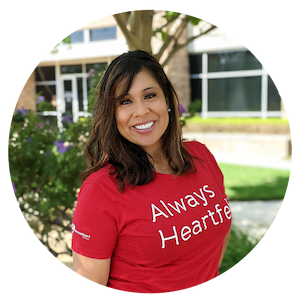 Veronica Balderas Financial Coach |
About the Author For the past five years, Veronica has provided members with the tools to create personalized financial plans that align with their goals. She offers information regarding budgeting, savings strategies, and spending plans to help members stay on track for long-term financial stability. Whether you're working to pay off debt, improve your credit score, or navigate a major financial change, Veronica provides practical advice. She focuses on building financial literacy and attacking complex challenges. Her hands-on approach ensures members are able to gain a better understanding of their finances and a clear plan for the future. |
|